
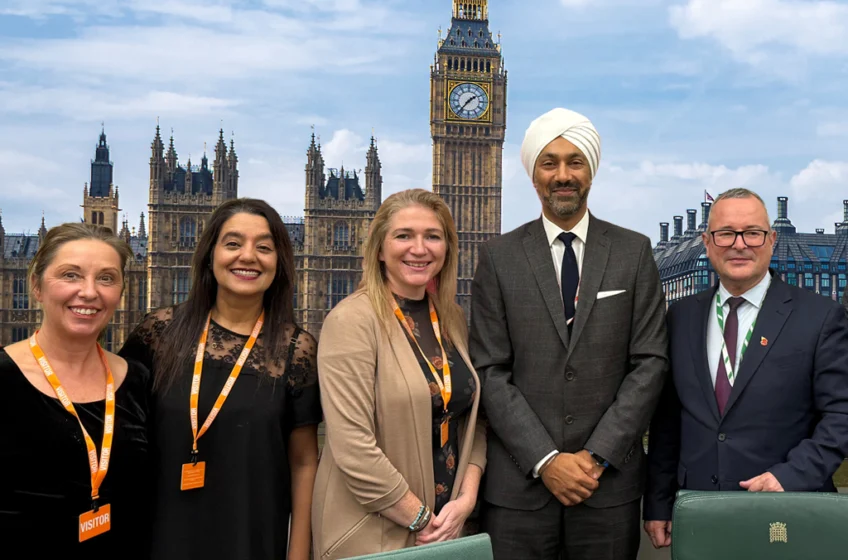
Westminster hosted an important and timely debate this week as policymakers, researchers, and industry leaders came together to examine how artificial intelligence is reshaping work, hiring, and the foundations of employment in the United Kingdom. The discussion, led by the Better Hiring Institute and the All-Party Parliamentary Group for Modern Employment, captured both the scale of the opportunity and the seriousness of the risks now emerging.
The room was filled to capacity, and the tone was one of urgency. AI is delivering outstanding gains in productivity and efficiency, yet it is also magnifying long standing weaknesses in the labour market. This tension sat at the centre of the discussion: technology can accelerate good practice, but it can also embed poor practice at unprecedented speed if left without guidance.
Among the speakers was Cheney Hamilton, Lead Research Analyst at Bloor Research International, whose FusionWork research has gained noteworthy influence across policy and industry circles. Her contribution set the stage for a clear shift in thinking. The United Kingdom does not simply require reform. It requires a fundamental reset of the way work is designed, measured, and governed.
The Cracks that AI Has Exposed
A pivotal point throughout the debate was that AI has not created the crisis in the employment system. Instead, it has exposed cracks that have been widening for years. Job creation has been declining for an extended period, with more people competing for fewer roles. Meanwhile, the workforce has changed dramatically, with growing diversity, higher expectations for flexibility, and an influx of workers whose needs are far more varied than those the traditional system was built to serve.
Despite this, most organisations still rely on outdated employment structures grounded in attendance, time measurement, and rigid job descriptions. These models no longer reflect reality. Many workers report that the work they perform has moved far beyond the duties written into their roles, while organisations continue to evaluate people through frameworks that struggle to capture actual value.
A System Designed Around the Wrong Measure
One of the most powerful themes raised by Cheney was the widening disparity between how humans are managed and how technology is managed. AI and automated systems are designed with clarity. They are assessed by accuracy, speed, and measurable outputs. People, in contrast, are often assessed by time spent, presence, or inherited processes that no longer align with performance or outcomes.
This mismatch is not simply inefficient. It is now actively holding businesses back. As AI takes on more task-based work, the need to redesign human roles around outcomes rather than hours has become essential. Continuing to bolt innovative technology onto an outdated employment model only accelerates its collapse.
The Fiscal and Policy Challenge Ahead
The debate also turned to the national implications of the shift in work. The United Kingdom’s tax model is built on human employment. When automation affects mid-level roles at scale, the impact on PAYE stability becomes significant. AI generated output produces no direct tax contribution, and most providers are outside the UK’s tax reach. This creates a potential fiscal shortfall that can no longer be ignored.
Several short-term stabilisers were discussed, including updates to TUPE rules for technology vendors and an automation levy when digital systems directly replace labour. These are not long-term solutions, but they do offer a bridge while policymakers redesign the framework for a mixed human and digital labour market.
Reset Rather Than Reform
A message repeated several times in the room echoed Cheney’s long-standing argument. Reform is insufficient. Reform adjusts the past. Reset designs the future.
A growing number of HR leaders already believe that a considerable proportion of roles could be automated today rather than years from now. The shift is already here. The choice now is whether the country designs for it or reacts to it.
Emerging models of Fusion Work were raised as credible blueprints for this transition. These models support effective partnership between human talent and AI, emphasise flexible and co sourced structures, and prioritise outcomes over time-based control. They also promote stronger governance for data, ethics, and intellectual property, areas where leaders consistently report a lack of guidance.
The Governance Gap
Despite rapid adoption of AI in workplaces across the country, there remains almost no formal direction from central bodies on how AI should be governed within employment settings. Organisations are being asked to move quickly while operating without clear legal or ethical boundaries. This creates uncertainty for employers and risk for workers, particularly when it comes to bias, data usage, and the integrity of hiring processes.
This gap is no longer sustainable. As AI becomes embedded in every stage of the employment lifecycle, from job design to performance management, strong governance must develop alongside innovation.
Leadership for the Next Era
Cheney’s reflections after the event captured the heart of the moment. On her way to Westminster, a sudden Tube closure forced her to navigate the rest of the journey on foot. Technology guided her, but it did not walk for her. It supported her, but human judgement and effort still carried the outcome. This is the essence of the future of work. Not a replacement of people, but a partnership in which each plays to its strengths.
AI is not the end of work. It is the chance to rebuild it properly. To design roles that draw out the best of human talent. To align digital capability with meaningful human contribution. To replace control with trust and replace presence with performance.
This Parliamentary debate was more than a conversation. It was a turning point. Leaders, policymakers, and practitioners now share a common message. The future of employment cannot be repaired by tinkering. It must be redesigned.
Bloor Research International will continue to support that journey through its Workforce Partnership Programmes and the forthcoming FusionWork Whitepaper, offering evidence-based guidance as organisations take their first steps toward resetting work for the AI age.
The moment for change has arrived. Now the United Kingdom must choose to design a system ready for the world that AI is already creating.
Print Article for this blog Download here