

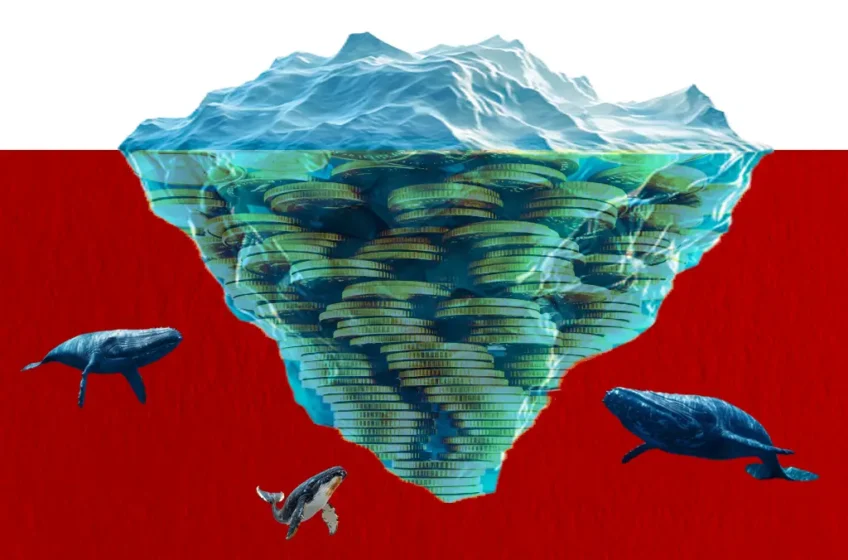
Ask your most experienced person how they spot a problem before it happens. The answer is often, “I just know.” Now ask yourself what the business would lose if they left tomorrow.
Their job description will not say. Neither will the handover notes. The cost of losing what they know tends to stay hidden until something goes wrong.
What is tacit knowledge?
Tacit knowledge is the know-how people build through experience that is hard to put into words: judgement, rules of thumb, a feel for what matters. The philosopher Michael Polanyi, who set out the idea in works including The Tacit Dimension, summed it up in one line: “we can know more than we can tell”.
The opposite is explicit knowledge, which is written down or easy to state: procedures, manuals, data. Organisations tend to record that kind well. The harder question is what sits outside the record, because systems, including AI tools, can only work from what has been recorded.
What does tacit knowledge look like at work?
Judgement. Knowing that a figure “looks wrong” before checking it, or that a request needs a phone call rather than an email.
Exceptions. Knowing which rule can bend, which cannot, and what happened the last time someone tried.
History and context. Knowing why a process works the way it does, so you know what will break if you change it.
Relationships. Knowing who to ask, who to trust and who needs warning before bad news arrives.
What does the data say about AI and workforce plans?
A minority of employers expect cuts. In the CIPD’s Autumn 2025 Labour Market Outlook, 17% of employers expected AI to shrink their workforce over the next year (survey of 2,019 senior HR professionals and decision-makers in the UK, excluding employers who did not know whether AI tools were used in their organisation).
A global survey shows both reduction and reskilling plans. In the World Economic Forum’s Future of Jobs Report 2025, based on over 1,000 leading global employers, 40% of employers surveyed anticipated reducing their workforce where AI can automate tasks, and 85% planned to prioritise upskilling their workforce. These figures describe expectations and plans, not outcomes. They do show that planning for
What is the hidden cost of losing tacit knowledge?
It shows up late. Nobody records the loss on the day. It appears weeks or months later, as slower decisions, repeated mistakes or work that nobody knows how to fix.
It does not appear in the numbers. A salary is on the payroll. What the person knows is on no balance sheet. Bloor’s balance sheet argument makes the point that, for most people in knowledge-intensive roles, the main productive asset is their accumulated knowledge, not their salary.
It compounds. Bloor’s Hire to Heir defines Labour Debt as “the accumulated cost of not capturing capability”. Each departure without capture adds to it.
Decisions that affect people’s jobs carry legal obligations. This post does not cover them, so take specialist employment advice on the process.
Why does AI make this more urgent?
Cuts are on some employers’ minds. In the CIPD’s Autumn 2025 Labour Market Outlook, 17% of employers expected AI to shrink their workforce over the next year (survey of 2,019 senior HR professionals and decision-makers in the UK, excluding employers who did not know whether AI tools were used in their organisation). The CIPD reported that, according to those employers, junior roles were most at risk.
Hiring may narrow at the start of careers. Stanford researchers using US payroll records to June 2026 found that employment of 22 to 25 year olds in AI-exposed occupations stood 19% below where it would be had it kept pace with their less-exposed peers, mainly through reduced hiring. The authors call these early, descriptive indicators rather than causal estimates.
Tacit knowledge is learned by doing the work. If fewer people start careers doing it, the question for any organisation is where its experts will learn in ten years. Neither study answers that, but both make it a fair question to ask now.
How do you find tacit knowledge before it leaves?
- Find who holds it. Look for people whose departure would leave a gap nobody can fill, and for work that only one person really understands.
- Ask about decisions, not tasks. “What do you do?” gets a process. “What did you do the last time this went wrong, and why?” gets the judgement behind it.
- Capture the how and why, not just the process. Record the reasoning, the warning signs and the exceptions alongside the steps.
- Work alongside, not just write down. Shadowing, pairing and talking through real cases pass on what documents cannot.
Decisions that affect people’s jobs carry legal obligations. This post does not cover them, so take specialist employment advice on the process.
Where does Bloor’s thinking fit?
OAI℠ (Original Augmented Intelligence), Bloor’s framing, puts intelligence into the human, not the human into the AI, which makes the person’s own knowledge the starting point. Bloor also argues that knowledge, capability and capacity are a better lens than skills, and explores the human digital twin (Digital Me℠), which builds up over time from a person’s meetings, calls, documents and presentations, and asks who should own it.
Frequently Asked Questions (FAQs)
Tacit knowledge is the know-how people build through experience that is hard to put into words, such as judgement, rules of thumb and a feel for what matters. The philosopher Michael Polanyi summed it up as “we can know more than we can tell”.
Explicit knowledge is written down or easy to state, such as procedures, manuals and data. Tacit knowledge is held in people’s heads and habits, and is learned by doing the work. Most organisations record the first kind far better than the second.
Examples include knowing which customer needs a phone call rather than an email, spotting that a figure “looks wrong” before checking it, knowing which rule can bend and which cannot, and knowing who to ask when something unusual happens.
People often cannot say how they know what they know, and the context that makes it useful is rarely recorded. It tends to pass on best when people work alongside experienced colleagues, talk through real decisions and learn from real cases.
Usually it leaves with them, because it is not in job descriptions, handover notes or systems. The cost often shows up later, as slower decisions, repeated mistakes or work that nobody knows how to fix. Decisions that affect people’s jobs carry legal obligations, so take specialist employment advice on the process.
Only in part. AI tools work from what has been recorded, so they cannot capture what nobody has said or written down. Capturing it still starts with conversations about real decisions. Tools can then help keep what is captured available and searchable.
Sources
- Michael Polanyi, The Tacit Dimension (University of Chicago Press). Source of the phrase “we can know more than we can tell”.
- CIPD, One in six employers say AI will shrink headcount: Autumn Labour Market Outlook, press release 10 November 2025. Total sample 2,019 senior HR professionals and decision-makers in the UK; fieldwork 19 September to 14 October 2025. The 17% figure excludes employers who did not know whether AI tools are used by employees in their organisation (6% of the total sample).
- Stanford Digital Economy Lab, Canaries in the Coal Mine? Six Facts about the Recent Employment Effects of Artificial Intelligence, revised 12 August 2026. US payroll data through June 2026.
Print Article for this blog Download here